
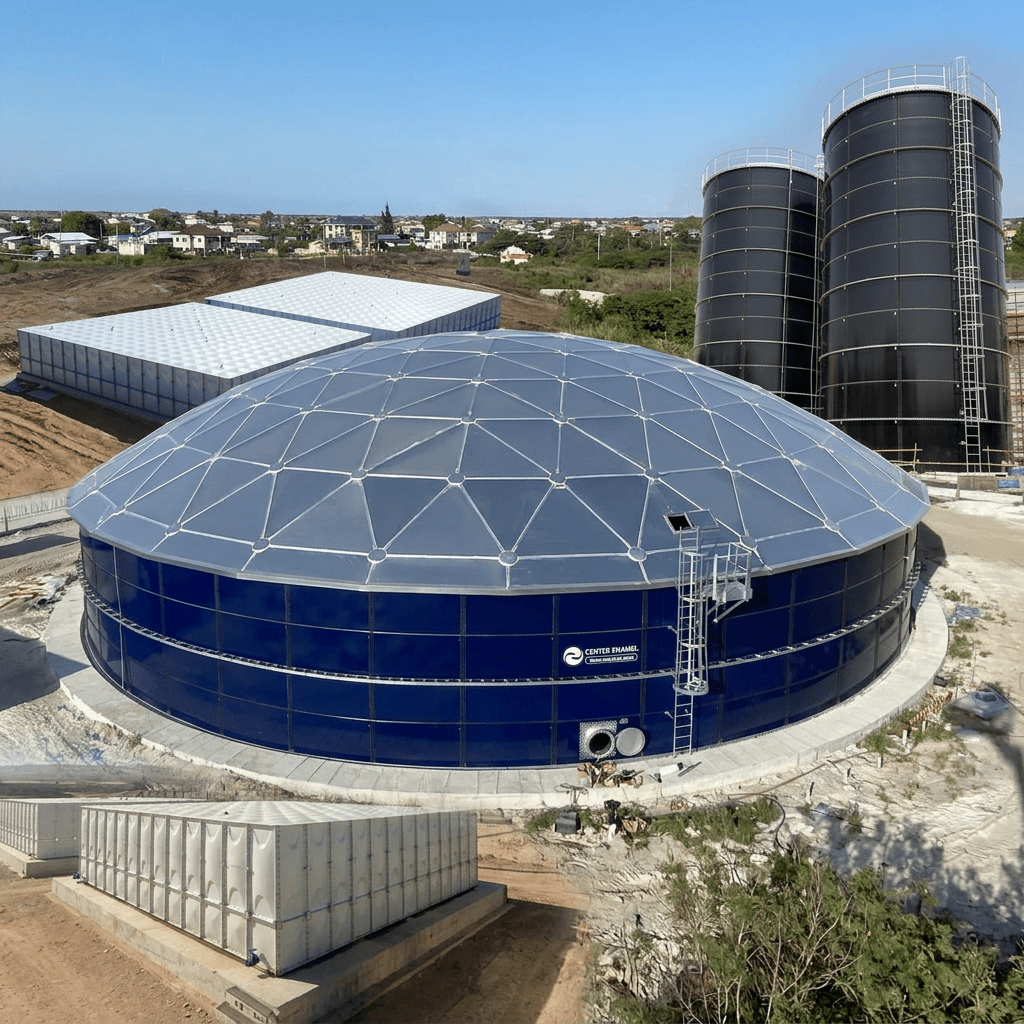
GRP sectional tanks, also called GRP panel or modular tanks, are one of the most common ways to store water in buildings, hospitals, data centres and industrial sites. They are light, quick to install and do not rust. Here is what you should know before you specify or approve one.
How a GRP sectional tank is built
The tank is assembled on site from moulded glass-reinforced plastic panels, typically 1 m × 1 m, bolted together with gaskets between them. Internal tie rods and stays, or an external steel frame on larger tanks, hold the shape under water pressure. Because it is modular, the same system can make a small 6 m³ tank or a large compartmented tank for a whole building.
Why choose GRP
- No corrosion and no internal painting, so maintenance is minimal
- Light panels that can be carried up stairs to roofs and basements where a crane cannot reach
- Flexible sizes and shapes to fit the available space
- Insulated panels available to keep water temperature stable and reduce algae
- Can be split into two compartments so one side is cleaned while the other stays in service
What to check in a submittal
Before approving a GRP tank, check that the resin and panels are certified for potable water, the panel thickness and wall build-up match the tank height, the base (steel skid or concrete plinths) is designed for the full weight of water, and that fittings, manholes, ladders and vents are included. A good submittal includes technical data sheets, certificates, drawings and a reference list from the manufacturer.
What El Safa does
We supply GRP sectional tanks as agents for EKOMAXI, a Turkish GRP tank manufacturer, and we prepare the full material submittal for consultant approval, as we did for a recent data-centre project. We also install GRP tanks and repair leaking gaskets and damaged panels on existing tanks, whatever the brand.
See our water tanks service or send us the capacity and dimensions you need.